02:30 · Saturday, February 15th 2026
Life is good.
I keep saying it like a summary of the whole situation. Like a stamp I can press onto my life and move on. And it's true. I'm not writing this from some disaster. I'm not writing it from rock bottom. I'm writing it from a place that's fine. Stable enough. Better than before.
Life is good.
But I've started to notice something: sometimes "good" is the most dangerous place to live. Not because it's secretly bad. Not because it's fake. Because it's comfortable. Because nothing is wrong. And when nothing is wrong, it gets dangerously easy to stop asking for anything more.
We've been taught to fear an "average life" like it's a verdict. We treat the markers of stability, a steady job, a partner, a place that feels just big enough, routines that make the day run smoothly, like a diagnosis of failure.
Which is insane if you actually say it out loud.
If a stable job and a steady love and a quiet home are "average," why were we trained to run from them like they're a fire?
The lie was never that a normal life is bad. The lie was teaching us that "average" is a set of circumstances, when in reality, it's a mentality. Average isn't your job title. It's a posture. It's what happens when you stop challenging yourself inside whatever life you're living.
And that's what I keep circling back to. Not the circumstances, but the posture. The moment where you stop reaching. The moment where "good enough" stops being a season and starts becoming a permanent address.
I watched a video recently that used Anthony Bourdain to make this exact point, and it hit harder than I expected. Not because I'm a chef or because I'm trying to host a travel show, but because his story is basically a clean diagram of the decision most people avoid.
He spent years in the grind of kitchens. He had his routines, his status, a real job. He also wanted to write. He tried. It didn't land the way you want it to land when you're younger and you still believe talent is supposed to show up with fireworks. At some point, the safer version of him could've taken over completely. Enough. Be realistic. Don't embarrass yourself again. You already built something stable. Why risk it?
That is the exact crossroads I keep thinking about. It isn't always a dramatic moment where you quit your job and move to a new country. It's the quiet one you hit in your own head when your life starts to solidify. You've got your routines. You've got your people. You know which options "work." You stop taking the route that might make you feel stupid. You stop doing the thing you're bad at. You stop being new.
And this is the part most people don't understand about Bourdain's pivot: he didn't build a bridge out of his comfort zone by blowing his life up. He built it while he was still standing in it.
He talked about writing in the margins of a "real job," waking up early, writing before the day started, then going into a brutal shift. He described it as getting up around 5 a.m. and writing for about an hour and a half before heading to work. That detail matters to me because it kills the fantasy excuse. It's not some myth where he was "finally free" and then became himself. He became himself while still clocking in.
He made a habit out of small ego deaths.
And once he started living that way, he didn't just escape an "average" career. He escaped the mentality that turns stability into a slow spiritual coma. He wrote, he mailed the work out, he took the kind of risk that isn't cinematic, it's humiliating. Submitting something to a place you're not sure you belong is its own form of ego death.
"Without experimentation, a willingness to ask questions and try new things, we shall surely become static, repetitive, and moribund."
Anthony Bourdain
Static. Repetitive. Moribund. That's what "average" feels like when it's no longer a life structure, but a life stance. And it's also what happens to your experience of time.
The Erasure of Time
I've lived both versions of this.
Freshman and sophomore year of college, I had days that basically vanished. Nothing happened because I wasn't trying to make anything happen. I wasn't pushing. I wasn't building. I was existing, but it felt like the days didn't leave fingerprints. I would wake up, do the basics, scroll, drift, finish the day, and somehow feel like I had no memory of actually being there.
Then junior and senior year, something shifted. Not all at once, not in a movie-montage way, but I decided to learn more. To do more. To try things I hadn't tried. I started pushing my boundaries on purpose, even when it was uncomfortable, even when it made me feel like a beginner again.
And time changed. My weeks didn't blur as much. My days didn't collapse into one long copy-paste.
At first, I thought that was just a feeling, a poetic thing people say when they're romanticizing "growth." But the more I sat with it, the more I realized it's not just a metaphor. It's literal biology.
Your brain is a miser. It's always looking for the cheapest way to run your life. When you repeat the same day over and over, your brain gets efficient. It automates. It stops paying full price in attention because it already knows how the story ends. You become fluent in your own routine, and fluency is energy-saving, but it's also memory-thinning.
What gets recorded isn't "time." What gets recorded are changes.
That's why whole months can disappear in hindsight. In memory-based models of time perception, the sense of how long something lasted in retrospect is tied to how much distinct information you can retrieve from that interval. More remembered change makes a period feel longer. Less remembered change makes it collapse.
And here's the part that makes me feel both uncomfortable and weirdly excited: novelty doesn't just make life "feel more alive." Novelty makes your brain physically reorganize.
"The brain is a dynamic system, constantly altering its own circuitry to match the demands of the environment and the capabilities of the body."
David Eagleman
That isn't a vibe. That's wiring.
At the microscopic level, your neurons aren't smooth. They're bristling with branches. Dendrites with spines that can change shape and density as you learn. When I force myself into the unknown, when I do something beginner-level, when I try something I might fail at, I'm not just "expanding my comfort zone." I'm demanding that my brain physically build new connections instead of reusing the old ones.
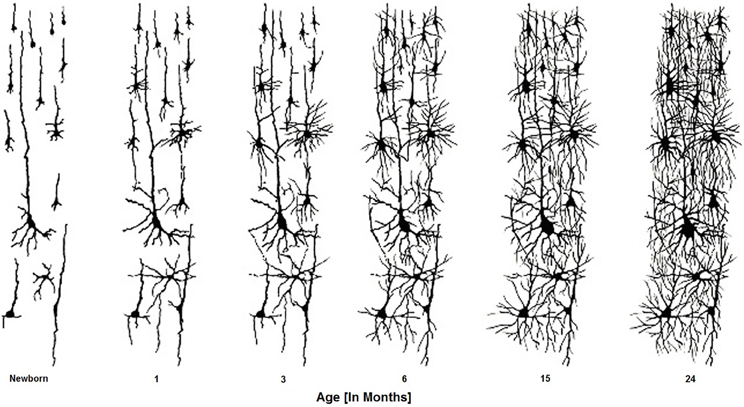
Dendritic growth, newborn to 24 months
That's why the beginner stage is so exhausting. It burns energy. It's loud in your head. It's your mind mapping new territory instead of driving a familiar route on autopilot. And it's also why those seasons of life feel longer in hindsight. Because they actually left marks.
But if novelty is the mechanism, and ego is the thing that keeps you from reaching for it, then the real question isn't "how do I grow?" The real question is: what's standing at the gate?
Ego. That's what.
Ego is slick. It doesn't introduce itself as the villain here to ruin your life. It shows up as pragmatism. It sounds responsible until you realize how often it's just fear wearing business casual.
"I'm being realistic."
"I don't have time."
"Maybe later."
"I'm not ready."
The ego lives right at the border where comfort ends and fear begins. Its entire job is to keep you from crossing that line, not because it hates you, but because it's obsessed with protecting your identity. The version of you that needs to look competent. The version of you that wants to avoid humiliation like it's physical pain.
Most people set up camp in the comfort zone and never leave. They don't fail because they tried and lost. They fail because they never pay the toll to cross the fear zone in the first place.
A "small ego death" is the price of admission.
Not a dramatic reinvention. Not burning your life down. Just choosing, on purpose, to be uncomfortable in a way that makes you grow. Submitting the work. Starting the thing. Being a beginner. Talking to the stranger. Taking the class. Sharing something before it's polished enough to protect you. It's a small death of the version of you that needs certainty before it moves.
And once you start paying that toll, something unexpected happens. You stop caring so much about the discomfort. You start caring about what you're building. The discomfort becomes fuel, not a wall. And that's when "average" starts to feel like a choice you're actively refusing, not a label someone else puts on you.
That shift changed everything for me. Because once the discomfort stopped being the thing I was running from and started being the thing I was running through, I noticed a pattern in every moment I've actually felt alive.
I'm realizing how addicted I am to building.
The happiest moments of my life haven't been when I was coasting. They've been when I was making something. Building a routine. Building a habit. Pushing through the grueling, repetitive hours of endurance training just to see if the physical limits of my body can be stretched. Building a product.
When it comes to the latter, I've realized I have zero interest in chasing cheap, repetitive network effects. There is nothing to scratch my head with there. The real work is focusing on one difficult niche and growing it from the ground up, architecting something that actually solves a problem. Building is existential. It feels like proof that I'm here.
My brain connects that to a place people might not expect: scripture.
I'm not the most religious person, and I'm not going to pretend to be. But there's a verse in the Qur'an I've carried around in my head for years. God says:
هُوَ أَنشَأَكُم مِّنَ الْأَرْضِ وَاسْتَعْمَرَكُمْ فِيهَا
"He brought you forth from the earth and settled you therein to cultivate it."
Qur'an 11:61
That word, ista'marakum, doesn't just mean "placed you there." It means He tasked you with building it. Developing it. Bringing something out of nothing. It's a mandate woven into existence itself: you are not here to just occupy space. You are here to make something of it.
And this idea isn't unique to Islam. The Torah opens with God placing Adam in the Garden of Eden l'ovdah ul'shomrah, "to work it and to keep it." Christianity carries the same thread, the parable of the talents, where the servant who buries his gift instead of multiplying it is the one who's condemned. All three Abrahamic traditions converge on the same fundamental claim: creation is not passive. You were put here to build.
That idea does something to me. It makes the whole "average" conversation feel small, like I've been arguing over labels when the real question is: What am I producing with my life? What am I growing? What am I turning into?
And because I study the macroeconomics of history, my mind always zooms out.
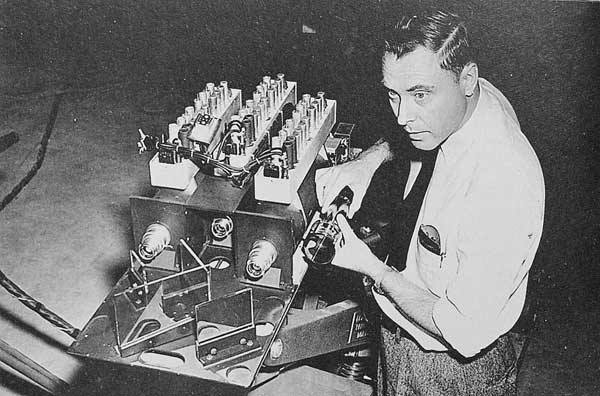
Bell Labs, 1947
Look at the engineers at Bell Labs in 1947. They didn't build something flashy. They focused entirely on one incredibly dense, difficult niche, semiconductor physics, and built the first transistor, a piece of hardware that completely changed human history.

ENIAC

Dr. Jonas Salk, University of Pittsburgh
Walking around campus here in Pittsburgh, the history of this is everywhere. This city was built by steelworkers suspended hundreds of feet in the air, but it's also where Dr. Jonas Salk and his university team focused intensely on a single, terrifying disease until they constructed a vaccine.
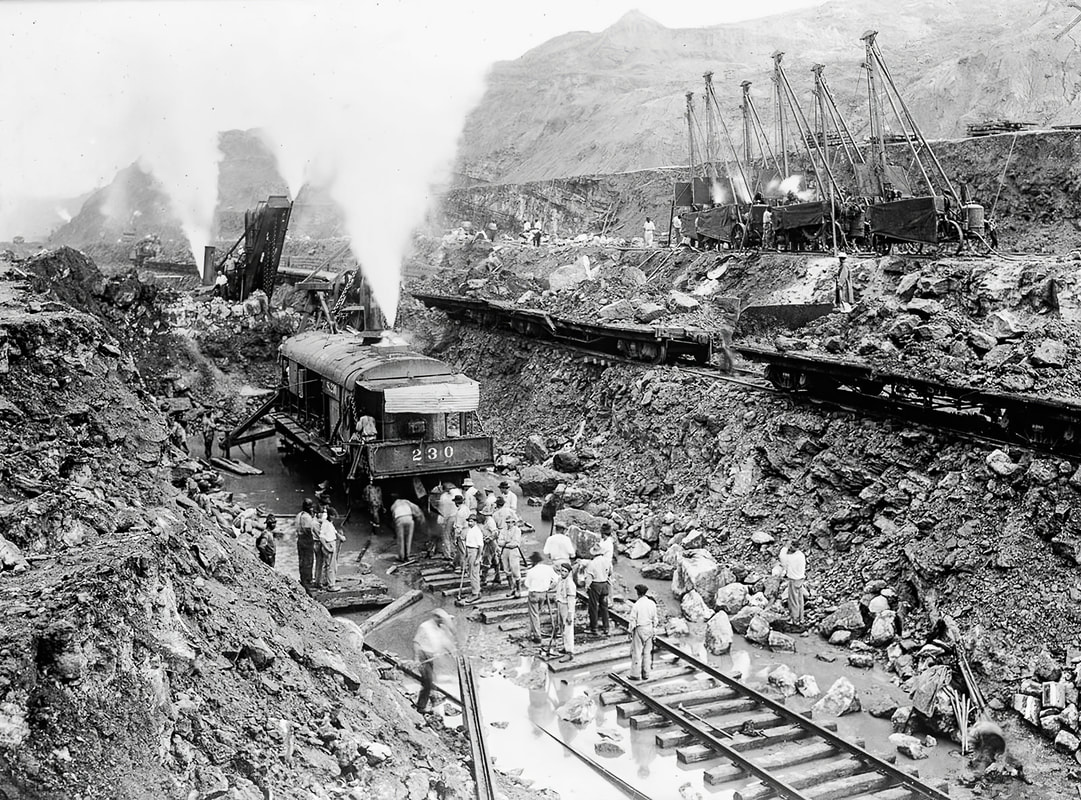
Panama Canal construction
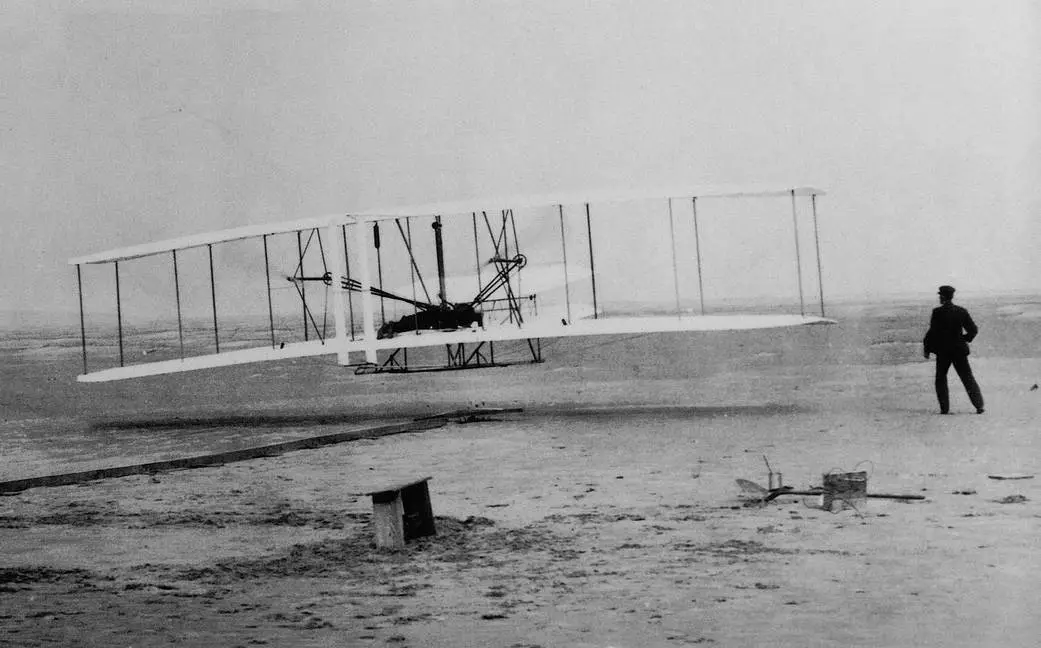
Kitty Hawk, 1903
Apollo 11, 1969
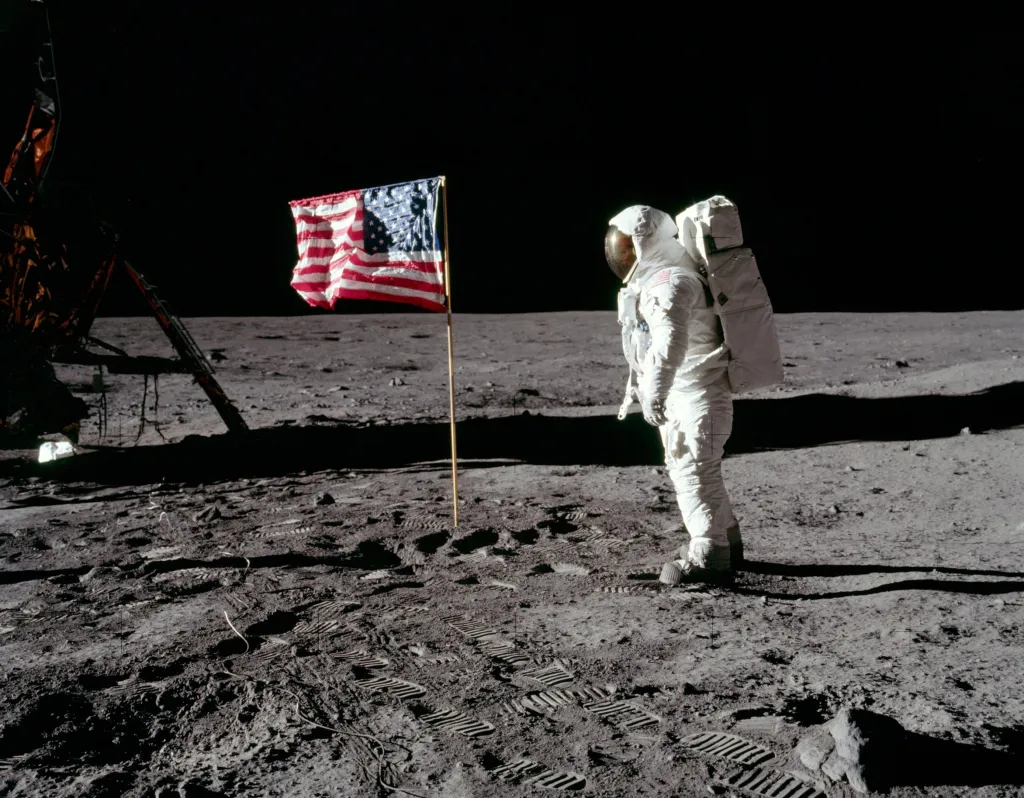
It's the same spirit that drove the clash between the Soviets and the Americans. The Space Race wasn't just a flex, it was an existential fight over who could construct the future. One side sends something into orbit, the other side has to respond, and suddenly an entire society reorganizes around building what didn't exist yet.
I'm not a nationalist. But I am proud to be American in this one specific way: there's a cultural spirit here of cutting into the unknown. A stubborn belief that something can be made from nothing. That invention is possible. That the future can be built.
That's a kind of faith too. Not religious faith. Faith in making.
And that faith is what makes me refuse to settle. When I say, "For me, there is no option B; it's either I win or I win," I know how intense that sounds. I know it's not a gentle sentence. But it's also a refusal.
I refuse to bow down to a life that's technically fine but spiritually dead. I refuse to let comfort kill my identity. I refuse to stop trying just because stopping would be easier to explain to other people.
And I think that's the real fear behind "average," if I'm honest. It's not dying. It's living a long life that I can't actually remember because I didn't live it with intention. I wasn't awake for it.
"It is not that we have a short time to live, but that we waste a lot of it."
Seneca
That line doesn't feel ancient to me. It feels like a warning written for the exact moment when your life becomes "good" and you start confusing comfort with fulfillment.
Life is good. I mean that. But I don't want "good" to become the ceiling. I don't want my days to go quiet and vanish because I stopped taking risks small enough to be doable and real enough to change me.
I want the days to leave marks.
Even if it means eating a bad meal once in a while, because I'd rather risk that than look up years from now and realize I've been starving in a life I was too afraid to taste.
More to come.